

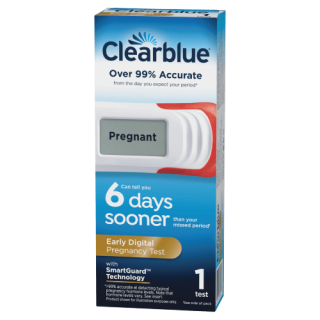
Early Digital Pregnancy Test
Clear results in words 6 days before your missed period2
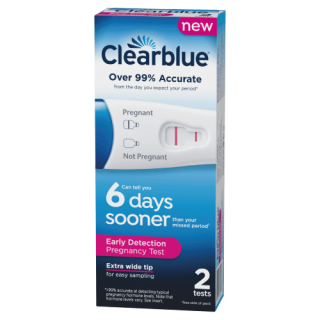
Clearblue® Early Detection Pregnancy Test
Can tell you 6 days sooner2 than your missed period
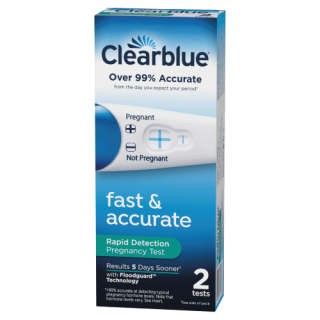
Rapid Detection Pregnancy Test
Fast & accurate
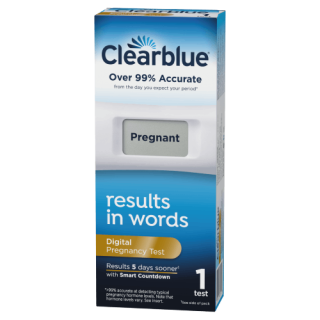
Digital Pregnancy Test with Smart Countdown
Unmistakably clear results in words
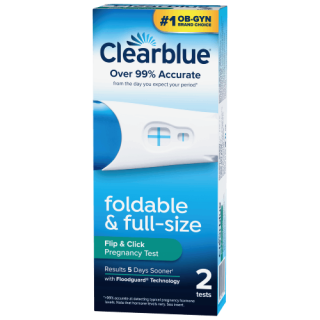
Flip & Click Pregnancy Test
Foldable for easy use and disposal
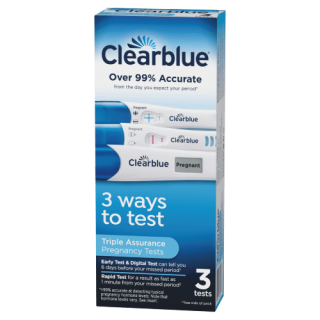
Pregnancy Test Combo: Triple Assurance
3 ways to test for pregnancy
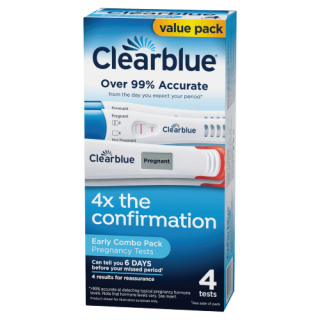
Clearblue® 4x the confirmation
4 results for reassurance
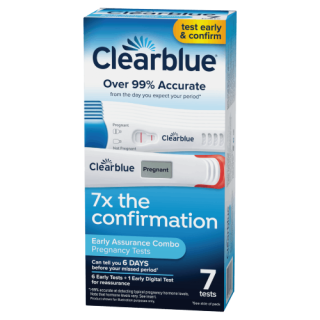
Clearblue® 7x the confirmation
7 results for reassurance
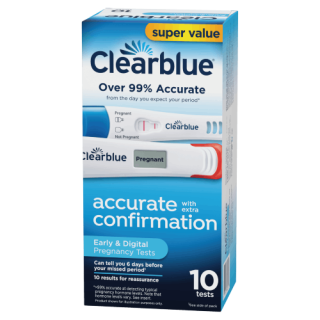
Clearblue® Accurate with extra confirmation
10 results for reassurance
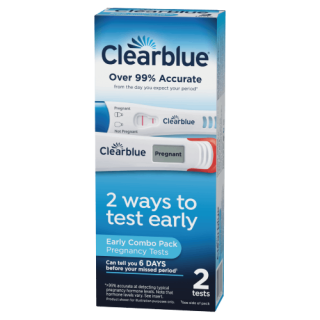
Clearblue® 2 ways to test early
2 results, double confirmation
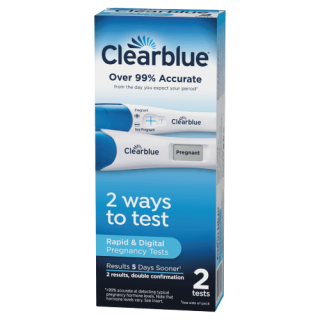
2 ways to test
2 results, double confirmation
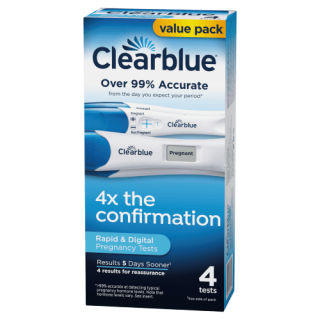
4X the confirmation
4 results for reassurance
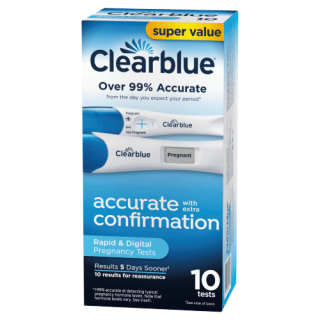
Accurate with extra confirmation
10 results for reassurance
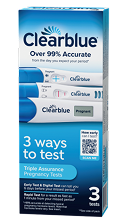
We've got you covered with our bundled options
Need to test at different times or want extra reassurance? Our combo packs are here for that.
Explore our combo packs
We are here for you.
Everything you need to know
How do Clearblue® Pregnancy Tests work?
When you are pregnant, your body produces the pregnancy hormone hCG (human Chorionic Gonadotrophin). The level of hCG doubles approximately every 24 hours in the first weeks, reaching a maximum at around 8 to 10 weeks into the pregnancy.
Clearblue® pregnancy tests work by detecting tiny amounts of the pregnancy hormone in your urine and are over 99% accurate1 from the day you expect your period.
When can I test with Clearblue® Pregnancy Tests?
Clearblue® offers a range of pregnancy tests, now including Clearblue® Early Digital Pregnancy Test and Clearblue® Early Detection Pregnancy Test which can give you results up to 6 days sooner than your missed period.
If you take a pregnancy test before your expected period and get a ‘Not Pregnant’ result, there is still a chance that you may be pregnant because the level of the pregnancy hormone was not high enough for the pregnancy test to detect. See the Clearblue® Pregnancy Test product pages for details of results of clinical testing with early pregnancy.
Do I need to use first morning urine?
If testing from the day you expected your period, you can take a pregnancy test with urine from any time of the day. If testing before your expected period, use the first urine of the day. Avoid excessive fluid intake before testing. Always read the leaflet before testing.
Can any medication or medical conditions affect the result?
- Always read the manufacturer’s instructions for any medication you are taking before taking a pregnancy test.
- Fertility drugs containing hCG (such as Pregnyl® and Profasi®3) can give misleading results (these fertility drugs are usually given by injection, and testing too soon after administration may give a false 'Pregnant' result).
- Other fertility therapies, painkillers and hormonal contraceptives (e.g. contraceptive pill) should not affect the result. However, if you have recently stopped taking hormonal contraception or are using fertility therapies, your periods may be irregular, leading you to test too soon.
- If you have recently been pregnant (even if not carried to full term) you may get a false ‘Pregnant’ result.
- Ectopic pregnancy, ovarian cysts, menopause and some very rare medical conditions can give misleading results.
If you do get unexpected results you should discuss them with your doctor.
How accurate are Clearblue® Pregnancy Tests?
All Clearblue® Pregnancy Tests are more than 99% accurate in laboratory tests, when used from the day you expect your period to start1.
Understand more

How long does it take to get pregnant?
Many couples assume they’ll get pregnant quickly. Although over a third of healthy couples will get pregnant in the first month of trying1, it’s also perfectly natural for it to take up to a year for …

Am I Pregnant? - Quiz
Have you missed your period or noticed some of the early signs of pregnancy, such as morning sickness or cravings? Are you looking for an online pregnancy test?While such a thing doesn’t exist, why no…
- > 99% accurate at detecting typical pregnancy hormone levels. Note that hormone levels vary. See insert.
- Clearblue Early Digital: 78% of pregnant results can be detected 6 days before the missed period (5 days before the expected period).
Clearblue Early Detection: 77% of pregnant results can be detected 6 days before your missed period. - Nepomnaschy PA, Weinberg CR, Wilcox AJ, Baird DD. Urinary hCG patterns during the week following implantation. Hum Reprod 2008 Feb;23(2):271–7.
- Pike J, Godbert S, Johnson S. Comparison of volunteers' experience of using, and accuracy of reading, different types of home pregnancy test formats. Expert Opinion on Medical Diagnostics 2013; 7(5):435-4