
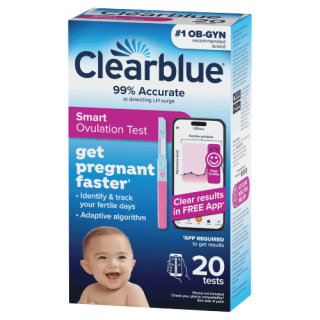
Smart Ovulation Test
Get Pregnant Faster
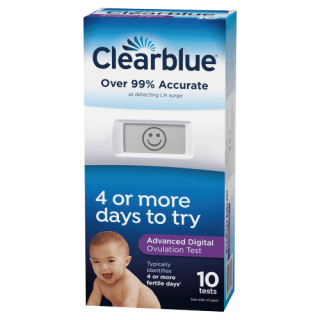
Advanced Digital Ovulation Test
Typically identifies 4 or more fertile days3
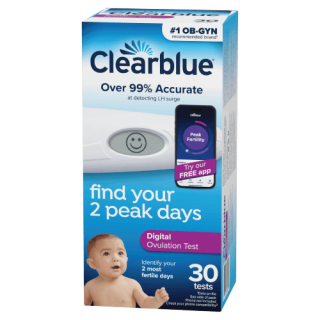
Digital Ovulation Test
Identify your 2 most fertile days
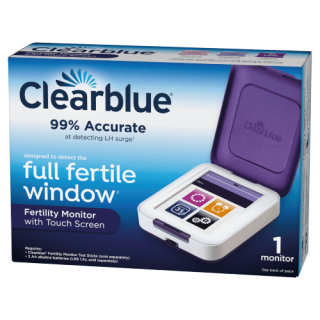
Fertility Monitor with Touch Screen
Proven to increase the chances of getting pregnant by 82%1
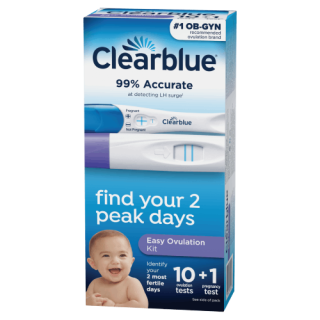
Easy Ovulation Kit
Identify your 2 most fertile days


We are here for you.
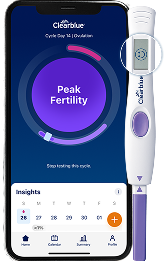
Predict your periods, track your cycles or try for a baby
Download the app:
Download the app:


Everything you need to know
Can any medication or medical conditions affect the result?
Always read the manufacturer’s instructions for any medication that you are taking before doing a test. Certain medical conditions and medications can give misleading results, for example:
- you are pregnant.
- you have recently been pregnant.
- you have reached the menopause.
- you have impaired liver or kidney function.
- you have polycystic ovarian syndrome.
- if you are taking fertility drugs containing luteinizing hormone or human Chorionic Gonadotrophin.
- you are taking antibiotics containing tetracyclines.
- some fertility treatments such as clomiphene citrate may give misleading High Fertility results.
Peak Fertility results should be unaffected. If you have recently been pregnant you should wait until you have had 2 natural menstrual cycles and note how long these are before using Clearblue® Advanced Digital Ovulation Test. Please check with your doctor if you are taking any medication or have any medical condition before planning a pregnancy. If you have a medically diagnosed fertility problem you should ask your doctor if Clearblue® Advanced Digital is suitable for you.
How accurate is Clearblue® Advanced Digital Ovulation Test?
A laboratory test has shown the test to be over 99% accurate in detecting the LH surge (Peak Fertility)2
Can I test more than once a day?
For your High fertility results to be reliable it is important to only test once a day using the urine after your longest sleep.
After your first day of High Fertility is displayed, and the test starts looking for your LH surge, you can test more frequently if you would like to, but avoid excess fluid intake before testing.
What if I missed testing with the first urine after my longest sleep?
You should test as soon as you can but avoid drinking a large amount of liquid beforehand. If you do not use the first urine after your longest sleep you may see unexpected High Fertility results so it is important that you remember to use the first urine after your longest sleep.
Can any medication or medical conditions affect the result?
Always read the manufacturer’s instructions for any medication that you are taking before testing. Certain medical conditions and medications can give misleading results, for example if you are pregnant, or have recently been pregnant, have reached menopause, have impaired liver or kidney function, have polycystic ovarian syndrome, are taking fertility drugs containing luteinising hormone or human Chorionic Gonadotrophin, or are taking antibiotics containing tetracyclines. Some fertility treatments such as clomiphene citrate may give misleading High Fertility results. Peak Fertility results should be unaffected. If you do get unexpected results you should discuss them with your doctor. If you have recently stopped using hormonal contraception your cycles may be irregular so you may wish to wait until you have had 2 cycles before testing. Please check with your doctor if you are taking any medication or have any medical condition before planning a pregnancy. If you have a medically diagnosed fertility problem you should ask your doctor if Clearblue® Connected Ovulation Test is suitable for you.
I have now seen High Fertility results for a long time, surely I can’t be fertile all this time?
- When the test detects a rise in your level of estrogen it displays High Fertility (flashing smiley face), and will continue to display High Fertility in the following days whilst it looks for your LH surge.
- If you start testing too early in your cycle or too late (after the LH surge has occurred) then you may see a lot of High Fertility days.
- If you started testing on the correct day for your usual cycle length and you see 9 or more days of High Fertility, it is unlikely that you will see Peak Fertility in this cycle. You may wish to stop testing for this cycle and save any remaining tests for next cycle.
- Occasionally some women have an LH surge that is too low for the test to detect, or they do not ovulate during a cycle and in this case they may see lots of High Fertility days but no Peak Fertility. This is not unusual and may happen in approximately 8% of cycles.
- If you don’t see Peak Fertility for 3 consecutive cycles we recommend you discuss this with your doctor
- Remember, your results are personal to you and you may see more than 2 High Fertility days – see table in Q3.


- In the first cycle of use vs not using the Clearblue® Easy Fertility Monitor. Study of 991 women in the US (2002)
- In a study of 87 women, 4 or more fertile days were identified in 80% of cycles using actual cycle length (2012)
- Ellis JE., et al. Human Reproduction (2011) 26: i76
- Brezina PR., et al. Fertil & Steril (2011); 95(6): 1867-78
Bluetooth® word mark and logos are registered trademarks owned by Bluetooth SIG, Inc. and any use of such marks by Clearblue® is under license. Other trademarks and trade names are those of their respective owners